✨ Premium Quality, Lower Price: Get 10% Off AFC Products – No Coupon Needed! ✨
Filter Inspection & Replacement Protocols
Maintaining a strict filter verification schedule is essential for protecting your equipment, ensuring a flawless finish, and compliance with environmental and safety regulations. This guide establishes standard operational protocols for monitoring and replacing intake, exhaust, and Air Make-Up Unit (AMU) pre-filters.
Part 1: Filter Inspection Schedules
Filters must be checked at regular intervals to prevent restricted airflow or premature equipment wear. Use the following baseline schedules, adjusting higher if your daily production volume dictates:
1. AMU Pre-Filters (Incoming Air)
Frequency: Inspect weekly; replace every 1 to 3 months (depending on outdoor air quality and environmental debris).
Protocol: Check for heavy dust loading, bugs, and moisture buildup from seasonal weather. Clean pre-filters preserve the life of your more expensive internal intake filters.
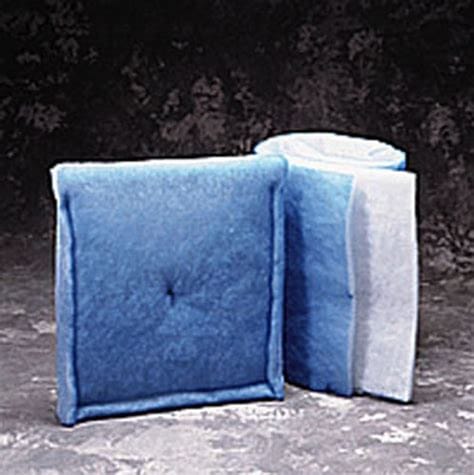
2. Intake Ceiling/Plenum Filters
Frequency: Inspect weekly; replace every 3 to 6 months (or when visual quality degrades).
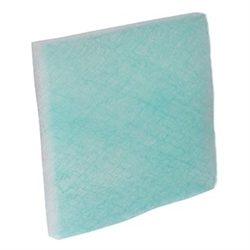
Protocol: Look for fiber migration, separation from the holding frames, or face-loading from migrating dust. If you see dirt or shadows on the clean side of the filter matrix, replace them immediately to prevent paint contamination.
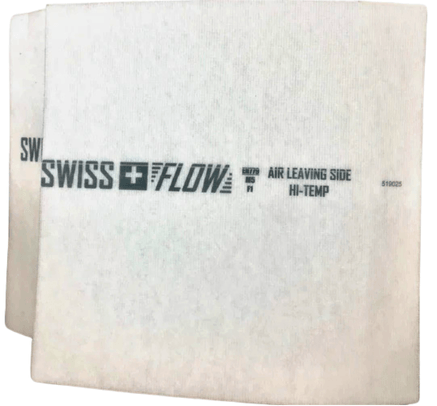
3. Exhaust Filters (Primary & Secondary)
Frequency: Inspect daily via the manometer; replace every 40 to 60 spraying hours, or when your manometer hits 0.50″ w.c. (or your booth’s specific target limit).
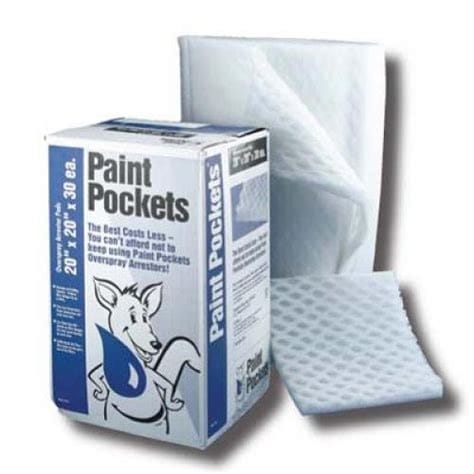
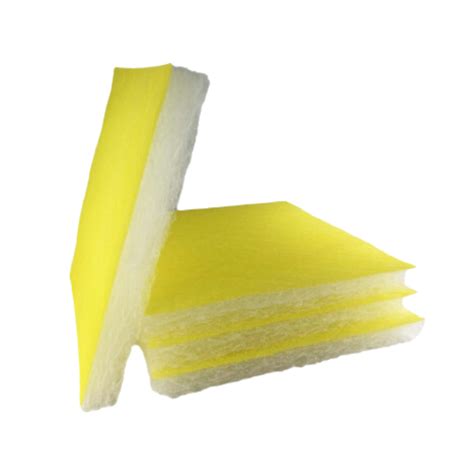
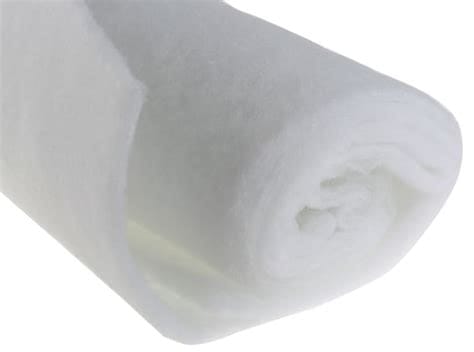
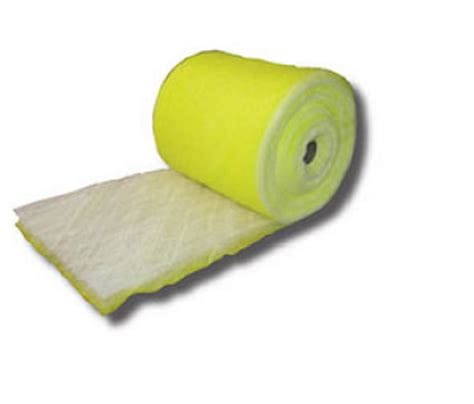
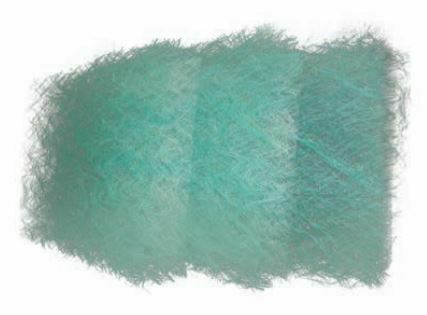
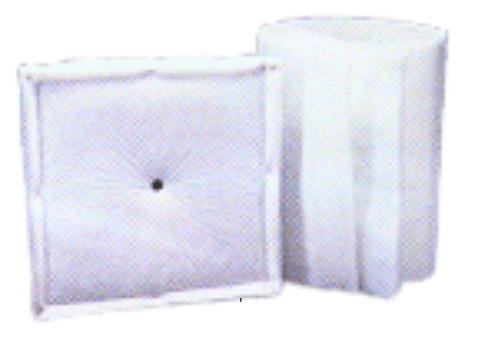
Protocol: Ensure proper grid sealing and verify that no overspray is bypassing the media roll or pads.
Part 2: Handling Specialized Media & High-Risk Coatings
When spraying certain types of industrial or automotive coatings, standard disposal and inspection practices must be elevated to manage increased chemical or fire risks:
⚠️ Nitrocellulose & Cross-Linking Coatings
If your shop utilizes fast-drying nitrocellulose-based lacquers or specific wood-finishing coatings, the overspray trapped in your exhaust filters remains chemically active and highly volatile.
Spontaneous Combustion Hazard: Layered nitrocellulose dust inside an exhaust filter can spontaneously ignite if exposed to concentrated heat, friction, or rapid drying air.
Mandatory Evacuation & Wetting Protocol: When removing loaded exhaust filters that contain nitrocellulose or highly reactive chemistry, immediately submerge the used filters in water or a designated fire-safe container filled with water.
Never Stagnate: Do not store dry, loaded filters inside the shop or in standard garbage receptacles overnight. Move wetted filters directly to an outdoor, hazardous-waste-compliant container.
⚠️ High-Solid & Waterborne Overloading
Waterborne and high-solid coatings are heavier and hold more mass per volume.
Face-Loading Watch: These coatings can “face-load” an exhaust filter rapidly, sealing the outer layer before the depth of the media is fully utilized.
Watch the Gauge: Do not rely purely on a visual check for these coatings; trust your manometer reading, as airflow can drop sharply even if the back of the filter pad still looks clean.
Part 3: Operational Rules for Filter Swaps
Never Run Empty: Never operate the spray booth fans if any filter is removed. Running the booth without exhaust filters pulls sticky overspray directly into the fan blades, pulleys, and exhaust stack, throwing the assembly out of balance and creating a severe fire hazard.
Secure the Seals: When installing new pads or rolls, verify that there are zero gaps along the tracks or holding grids. Even a 1/4-inch gap allows significant overspray bypass, completely defeating the purpose of the filtration system.