
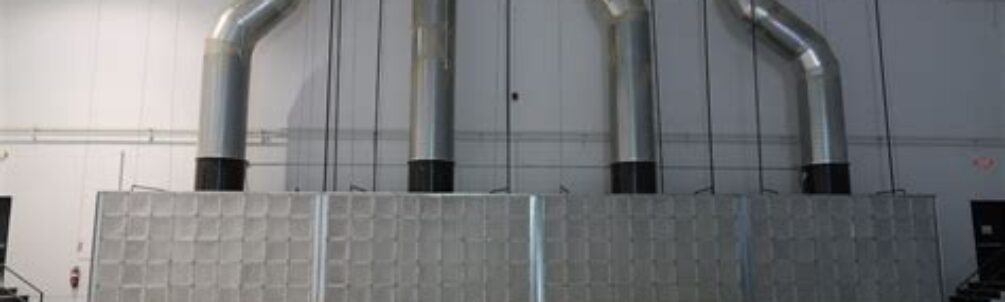
Over time, fine particulates and sticky overspray escape past even the highest-quality filters, settling inside your booth’s intake and exhaust plenums and ductwork. Allowing this accumulation to build up chokes your fan’s airflow capacity, increases static pressure, and creates a severe, hidden fire hazard within your exhaust stack.
Step 1: Pre-Service Isolation & Safety Controls
Decontaminating ductwork requires entering confined or elevated spaces and working directly around heavy fan assemblies. Never skip these critical safety preparation steps:
Lockout/Tagout (LOTO): Complete a full mechanical and electrical lockout of the exhaust fans and Air Make-Up Unit (AMU). Disconnect and tag the main breakers at the control panel to guarantee the fan blades cannot rotate or turn on automatically while a technician is inside the stack.
Personal Protective Equipment (PPE): Technicians must wear full-body protective suits, heavy-duty gloves, safety goggles, and a well-fitted particulate or vapor respirator to protect against breathing in disturbed, toxic paint dust.
Static Grounding: Ground all cleaning equipment to the booth structure to prevent static electricity arcs, which can ignite loose solvent vapors or airborne dust clouds.
Step 2: Safe Scraping Procedures for Plenums & Ducts
Hardened overspray deposits on the metal walls of the exhaust plenum and vertical ductwork must be peeled or sliced away carefully to avoid creating friction sparks.
Utilize Non-Sparking Tools Exclusively: Just like wall maintenance, standard steel scrapers are strictly prohibited. Use only brass, bronze, aluminum, or non-sparking plastic scrapers to remove caked-on residue.
Top-Down Execution: Always begin scraping at the highest accessible point of the vertical exhaust stack or intake plenum, working your way downward. This allows loosened sheets and heavy flakes to fall naturally to the floor or plenum base for centralized collection.
Inspect Structural Fasteners: While scraping along the interior seams and joints, inspect the structural rivets, bolts, and access panel latches. Tighten any hardware loosened by fan vibrations over time.
Step 3: High-Efficiency Extraction & Vacuuming
Sweeping up dry paint dust with a standard broom creates a hazardous, airborne dust cloud that can ruin future paint jobs and risk a dust explosion.
Explosion-Proof Vacuums Only: Use an industrial, explosion-proof vacuum cleaner certified for hazardous locations (Class I, Division 1 / Class II, Division 1 environments) to extract loose debris from the corners, floor channels, and fan housing. These specialized vacuums prevent electrical motor sparks from reaching the collected flammable dust.
Clear the Fan Assembly: Pay special attention to the transition ring where the ductwork meets the exhaust fan housing. Vacuum away all loose debris surrounding the fan blade tips and motor shaft to keep the assembly balanced and free of friction-causing restrictions.
Final Visual Check: Before sealing up access doors, use a flashlight to verify that all scraped sheets, dirt clumps, and foreign objects have been completely vacuumed out of the airway. Leaving loose chunks inside will instantly pull them into the fan blades upon startup, throwing the assembly out of balance.